Acceptance of Circumstances, AEO, AI Search, Being Found On Bing, Being Found on Google, GEO, keeping up with trends, keywords, local search, Marketing Planning, organic SEO, prompt research, prompts, pull marketing, Search Engine Optimization, search terms, SEM, SEO, SEO tags, staying current

What’s The Difference Between Keyword Research and Prompt Research?

Over the years, we’ve talked a lot about both keywords and keyword research in our digital marketing agency’s blog (you can view a list of those keyword-related blog posts at https://allintheresults.com/category/keywords/), so we won’t repeat all of the valuable information about the keyword-research benefits shared there. Such research is just one piece, but an important piece, of an overall SEO/GEO/AEO strategy, and often is the foundation of all other SEO/GEO/AEO (search engine optimization/being found online) tactics, particularly when it comes to being found in traditional search engines.

Keyword research and prompt research differ on a number of fronts, including the factors outlined below.

How Keyword Research and Prompt Research Differ

  • Nature of What Is Entered In Search Tool By Searcher/Prompter: Traditional keyword research is/was all about discovering what topics (in the form of one word or several words (a phrase or statement)) individuals, in geographies your organization serves) are/were entering into traditional search engines on an average monthly basis. Eventually, keyword research expanded to “light” question research, using tools like Answer The Public. Prompt research is about discovering the various questions vs. statements or phrases that individuals are putting into an AI search/answer engine, like Google Gemini, Microsoft Copilot, or ChatGPT, to get an answer to a specific question.
  • Geographic Focus: as discussed above, keyword research is/was focused on understanding what terms/phrases/words target audiences in an organization’s geography were entering into traditional search vs. AI search tools to determine which phrases the target audiences were using most. With prompt research, there is far less geographic/physical-location focus, and it is far more difficult to obtain what questions individuals specifically in your geography are putting into an AI search tool, like ChatGPT, to get their question answered.
  • Ultimate Search Engine Optimization (SEO/GEO/AEO) Goal/Objective: Keyword research is all about helping an organization “rank well” in relevant search results fo relevant searches. Prompt research is about identifying the types of questions anyone anywhere is entering in an AI/answer engine that are either directly, tangentially, or very indirectly related to the products or services your organization offers.
  • How Research Is Used: Keyword research is used to inform the content that one includes on their website — whether it be post or page content — but particularly, the words used in/the phrasing of headers and subheaders, and behind-the-scenes meta/SEO tags. Prompt research is about identifying which content on your own website or a competitor’s website is being cited (linked to) by AI search engines, and therefore, being served up to “prompters” in the answer they spit back. This research can help inform the format and content nature of future blog posts or Q &A (housed in an FAQ website page). In addition, a different set of prompt research should be conducted to learn the exact phrasing/the nature of prompts that your target audiences are regularly putting into AI search/answer engines.
  • Tools Used To Conduct Research: Free and paid tools exist to conduct keyword research, and our team uses the free keyword planner tool in Google Ads to conduct such research. Prompt research involves the two types/branches described above and can be conducted by 1) adding the “first user source” dimension to your Google Analytics “pages and screens” report (see image below) and entering the names of various AI search engines, such as Gemini, Perplexity, Claude, Copilot, and Gemini, into the search query bar so you can see to which pages/posts on your site AI search engines are referring visitors. If you have a visitor coming to a specific post/page on your website, then the AI engine in-question must have cited (provided a link to) the website page or post in-question; and 2) using a paid tool like SEMRush which has a distinct “prompt research” tool within it to gather broader/more general target-audience prompt behavior, and therefore, behavior that goes on beyond your particular website.
This image is a print screen from a Google Analytics report where the page report has an added dimension of the first user source name so the user can see what AI search engine is referring traffic to which pages and posts of their website.

Need Help Conducting Prompt Research Or Keyword Research?

Reach out today for a complimentary discussion regarding keyword research and prompt research to support an overall SEO/AEO/GEO strategy!

Acceptance of Circumstances, AEO, AI Search, Being Found On Bing, Being Found on Google, blog, content marketing, differentiation, GEO, good will creation, keeping up with trends, lead generation, pull marketing, Search Engine Optimization, SEO, staying current, target audiences, Target Marketing, Understanding Your Environment, User experience, website

The ABCs & Ds Of Being Found In Answer-Engine-Prompt And Traditional-Search-Engine Results

We will continue to conduct our own informal research — assessing how and when our own website pages and posts appear in both AI/Answer Engine Prompt results and traditional search engine results — but based on what we are seeing as of the date of this blog post, the items outlined in the image and bulleted section below seem to be common features or characteristics of website content that is being served up most frequently in any kind of AI or search engine.

And, it’s also very much in keeping with what we observed and commented on almost two years ago related to commonalties among content that was being served in traditional and AI search engine results.

How To Be Found Online? Do The Following Related To Your Website Content

  • Always keep your target audience in mind — what content/information would be helpful to them vs. content/information you want to share. Don’t be self-serving!
  • Keep your content clean and easily consumable by using bulleted or numbered lists
  • Don’t be afraid to take a different approach to what other experts are saying on a particular topic
  • We’ve talked about this in a number of blog posts, including this post about the types of links every website should have — always include internal links and external links to relevant content
This light gray vertical image says in a dark powder blue "the ABCs & Ds Of Appearing In Answer-Engine-Prompt and Traditional-Search Results and Has Bulleted Sharing the Same Bulleted Content That Is Served In the Post Itself

Need Help Figuring Out How To Write Content For Your Target Audiences Or How To Structure That Content?

Reach out today for a free marketing consultation regarding your organization’s particular challenges related to being found online.

AEO, AI Search, Being Found On Bing, Being Found on Google, blog, Blog, Blogging, marketing best practices, organic SEO, pull marketing, Search Engine Optimization, search terms, SEO, Understanding Your Environment, website

Why Citing Experts Supports Your Own Organization Being Cited

Since we’ve already detailed in a recent blog post the reasons why you want your organization to be cited (when it comes to being found online), we won’t revisit that extensively here. We will say that being cited by a search engine or search tool, i.e., having them serve up a link to your organization’s website vs. just mentioning your name in relevant search results is a very positive thing. But, as we’ve also shared in the past, in order to increase the probability of that happening, your organization needs to demonstrate to search engines (both AI and traditional search engines like Google, Bing, and Yahoo) that you are credible and trustworthy.

What’s An Easy Way To Show Search Engines You’re Credible?

There’s a very easy way to show search engines you’re credible and that’s citing other organizations in your website content, i.e., mentioning and sharing links to experts in your field, or on whatever topic you are addressing in a particular section of your website. You can also ask experts to write a “guest blog post” for your site, or partner with a fellow expert on a blog post.

Citing experts on your website demonstrates to search engines:

  • Your organization makes and takes the time to follow and learn from experts
  • Your organization is not too self-serving, i.e., only focused on your needs and self-promotion vs. wanting to provide valuable information to your readers/target audiences, even if it means sharing information about other organizations
This is a gray rectangular image that runs vertically and says in dark-powder-blue letters, "citing experts supports your own organization being cited" and that contains the logo of our Braintree Digital Marketing agency.

How Do I Know What Experts To Cite?

One of the easiest and best ways to figure out who to cite on your website is to use LinkedIn’s search tool to enter search terms/keywords related to the topic for which you want to identify experts. You’ll likely want to select “posts,” “people,” or “services” by clicking on those buttons to generate lists to review after you’ve entered the keywords in the main search tool on the left top of your LinkedIn homepage.

Review the bios and posts of some of the individuals LinkedIn has served up to you, and begin following those that interest you. Their posts will start appearing in your newsfeed. You’ll soon see/learn which individuals resonate with you and whose websites you want to share on your website in appropriate places. And, keep in mind, you don’t have to share links to their website on your website, you can also share links to their LinkedIn profiles, as we’ve done below.

Here’s Some Of The SEO/AEO/GEO Experts We Like To Follow On LinkedIn

Kristine Schachinger

John McAlpin

Mike Friedman

Erik Marsh

Neil Patel

Eli Schwartz

The above individuals are just a handful of those we follow on LinkedIn because there’s so many experts, like us, who regularly create and share content about search engine optimization (SEO), answer engine/AI engine optimization (AEO), and generative engine optimization (GEO).

Need Help Identifying Which Experts You Should Follow On LinkedIn?

Reach out today to our Greater-Boston digital marketing agency for a complimentary discussion about your marketing challenges and opportunities.

Acceptance of Circumstances, accountability, AEO, AI Search, Being Found On Bing, Being Found on Google, blog, Blog, Blogging, content marketing, GEO, keeping up with trends, marketing best practices, organic SEO, pull marketing, Search Engine Optimization, search terms, SEO, staying current, strategic planning, target audiences, Target Marketing, website

Do I Need To Keep Adding New Content To My Website To Continue To Be Found Online?

The answer to the above question is pretty straightforward, and in most cases, “yes.” Given that we are in the day and age where individuals are using what’s known as answer engines — think ChatGPT, Perplexity, and Claude — more and more for both business and personal purposes, if an organization wants to continue to be found online, it DOES need to regularly produce and publish new content. Unless your site is one that is only meant to provide very static information and credibility to people who already know or have found your organization, your organization will need to do the following to support your organization’s name being mentioned or a link to your organization being served up by answer engines in response to relevant prompts.

This image is a print screen of what it looks like when you go into a WordPress website to add a new post and says "Add new Post" at the top and "enter title here."

What Types Of Content Do I Need To Create If I Want To Be Found In Answer Engine Results?

  • Blog posts or questions that reside within a website FAQ (frequently asked questions) page that answer questions that your organization regularly gets asked by prospective clients and existing clients
  • Blog posts or questions that reside within a website FAQ page that answer questions that keyword research and answer research indicates your target audiences are asking answer engines/searching on
  • Blog posts that speak to topics that are “tangential” to the particular products and services you offer, but that are important ones for your target audiences. For example, you might offer seniors in-home care, but write and publish some blog posts about senior fraud, aging in place/aging at home, and exercises for seniors. You get the picture!

Even if you’ve already published such content, target audiences’ questions and needs change/evolve, and both from a marketing standpoint and a search-engine standpoint, you need to demonstrate that you are staying current/relevant/up-to-date. It’s not good to have clients or prospective clients visit your site and see that you haven’t put up any new content in many months and/or content is outdated — it looks like you’re not minding your shop, and if you aren’t, what else might you neglect? And, search engines are more likely to serve up new, fresh content than content that is old and dated.

In sum, a static site will NOT help your organization be found online by target audiences, given how individuals gather information these days. Sure, it’s time-consuming, but regularly producing and posting new content answering questions and providing information that benefit your target audiences needs to be an ongoing marketing activity. As we’ve always said, “SEO (search engine optimization) is NOT a one-and-done exercise.

Need Help Figuring Out What To Blog About And How Frequently?

Reach out today to schedule a complimentary discussion with our digital marketing agency about your blog strategy!

Acceptance of Circumstances, AEO, AI Search, Being Found On Bing, Being Found on Google, community involvement, digital marketing agency, diversity, GEO, good will creation, Google Ads, Google My Business Profile, integrated marketing, keeping up with trends, local search, marketing best practices, nextdoor, online advertising, online presence, organic SEO, paid search, public relations, sales, Search Engine Optimization, SEO, social media, social media strategy, staying current, strategic planning, target audiences, Target Marketing, traditional marketing, Understanding Your Environment, website

The Marketing & Sales Downfall of Focusing Too Much On Appearing In Answer Engines (AI Search)

I’ve attended a decent number of webinars about AI search and how to get your organization’s name or a link back to your website (citation) to be shared by an answer engine in response to a topic-relevant user’s prompt. To-date I’ve heard the following list of key tactics mentioned related to how to get your organization’s name or page served up by answer engines like ChatGPT:

This is a very brightly colored image with question marks of different colors in the background and then the words, where, what, when, why, how, and who in brightly colored captions bubbles -- yellow, blue, pink, red, green, and orange.

What Types Of Organizations Benefit The Most From Appearing In Answer Engines/AI Search Engines?

For bigger brands who offer services and products throughout the whole U.S., or even the world, it makes great sense to want your organization’s name and links back to your website to appear in answer engine results related to relevant-topic searches. But for organizations who only offer services or products locally, i.e., in one city or town, in one state, or in one region (such as New England), there will likely be far less value to your organization to your organization from being found on answer engines than there would be for a national or international organization. Why? Because many individuals entering prompts into an answer engine just want their question answered. They aren’t looking to buy a product or pay for a service. And, the answer engines are more concerned about serving up content that easily/readily answers the question, regardless of the geography of the content producer or of the individual who is looking to get their question asked or answered. Unless, of course, the searcher/prompter includes their geography in the prompt, such as a prompt like “who’s the best digital marketing agency in Braintree MA.”

The Big Mistake That Organizations Who Need To Rank Locally Are Making Related To AI Search

Let’s face it, smaller, local organizations have far smaller budgets than a national brand like Progressive Insurance. They also have far smaller marketing teams. When they put the majority of their marketing dollars and energy into producing content that will be found in AI tools like Perplexity, Claude, and ChatGPT, they are missing out on other opportunities which might better help them be found locally, since, as we shared above, many individuals to whom their website content or name will be served up by answer engines won’t be in their geography.

What Are Some Marketing Tactics That Help Organizations Be Found Locally?

  • Nextdoor Business Profile and Advertising – you can’t get more local than that!
  • Google Search Ads – where you’ve selected a geography appropriate for your business
  • Display Advertising – Google, Meta (Facebook/Instagram), other social media advertising – again, where you’ve selected a geography appropriate for your business
  • Publicity in Local Newspapers and/or on Local Media websites
  • Community Event Participation and Sponsorships – in communities your organization serves
  • Social Media Strategy and Posting – like with AI/answer engine search – you can reach local individuals and businesses who follow you this way, but there’s always some “waste,” where you are reaching individuals who can/will never become a client or customer because of geography or for other reasons
  • Optimizing Your Google My Business Profile — this is your best opportunity to be found locally and have your organization served up for “near me” terms
  • Writing a guest blog post for another local organization who serves your geography and/or requesting a backlink from their website to your website

Why You Need To Diversify Your Marketing Efforts

Check out our blog post on why it’s particularly important right now to diversify your marketing efforts and reach out today to schedule a complimentary discussion of your organization’s particular marketing challenges and opportunities in the time of AI!

AEO, AI Search, Being Found On Bing, Being Found on Google, blog, Blog, Blogging, keeping up with trends, marketing best practices, online presence, organic SEO, pull marketing, SEO, SEO tags, staying current, Understanding Your Environment, website

A Comfy-Cozy Recipe For Being Found Online That Any Level Of Cook Can Follow

There’s so much talk these days about what tactics to use to be found in answer engines or AI tools. I like to refer to solutions like Google AI mode, ChatGPT, and Perplexity as answer engines or AI tools vs. search engines because these tools go far beyond search. Many individuals are using such tools to complete tasks, such as asking them to create formulas or work plans for them, or to come up with trip itineraries or write content/copy for them.

I wanted to come up with and share a recipe for being found in both traditional search engines (Google, Bing, Yahoo, etc.) and answer engines that felt authentic to those following the recipe. Something that felt comfortable and right vs. complicated and didn’t leave the cook feeling stressed out and confused and wondering how to “game” the answer engines. Below is a simple recipe for SEO (search engine optimization) and AEO (answer engine optimization) success that I came up with.

This is a rectangular image that shows a cookbook open on a table that houses a red and white checked tablecloth and fresh tomatoes and herbs that will be used to make the vibrant Italian recipe shown on the right hand side of the cookbook, a recipe that has mozzarella cheese and a thick tomato sauce

A Simple Recipe For SEO and AEO Success

  1. Start by answering questions via a main FAQ page, or in shorter FAQs housed within main pages of your website, that target audiences have about your organization and your specific products and services.
  2. Add in answers to questions that target audiences have, in general, about your industry/business line and the different products and services associated with it – again, these should be more general vs. about your specific products and services and could be answered in an FAQ, or in one or a series of blog posts.
  3. Sift in some website blog post content that is helpful to your target audiences that is “tangential, i.e., not directly related to your products or services, but information that would be valuable to your target audiences.
    • A great example of this is an estate planning law firm client who is sharing information about aging well with clients since many are seniors.
  4. Sprinkle in a synopsis at the beginning or end of any blog post you create, so search engines, answer engines, and readers know what they will learn about when they read that blog post. Then, use that synopsis to inform your meta description tag for that blog post.

And, voila, you’ve created a recipe that all adds up to being helpful and kind, and created an approach that should feel comfortable and authentic to every organization!

Acceptance of Circumstances, AEO, AI Search, Being Found On Bing, Being Found on Google, organic SEO, pull marketing, Search Engine Optimization, SEO, website

The Kind Of Citation Your Organization Wants To Get

Often when we think of the term “citation,” whether it pertains to our personal life or our business, we think of something bad or negative. Per Findlaw.com’s definition of “citation,” when someone hears the word “citation,” their mind may immediately go to thoughts of having to appear in court and/or being charged for some kind of minor offense.

But in the world of being found online (SEO, GEO, AEO), particularly in the results spit back by AI search tools like ChatGPT, being awarded a citation is a positive thing. It means the AI search engine in-question has included a link back to your organization’s digital property or assets or an external organization’s digital content that mentions you (often your or an external party’s website, but it could be a social media or discussion-forum presence or post).

Two Types Of Citations You’ll Want And Need To Be Found Online

As we outlined in great detail in our blog post about how to ensure AI search tools view your organization as trustworthy, you are going to want and need these two types of citations to succeed in being found online in AI search tool results:

  • Citations from AI search tools themselves where they are sharing a link to content that you own or that mentions you
  • Citations from non-search-tool, external organizations who provide links on their digital properties/assets back to your digital properties and assets

You’ll really want and need both of the above in order to drive traffic directly from AI search tools to your website because, as pointed out in the previous blog post whose link we shared above, an AI search tool is less likely to provide a citation (backlink) to your website if you aren’t receiving citations from other creditable external organizations on the internet.

This is a rectangular-shaped image that runs vertically with a gray background that reads in turquoise or dark gray letters: "Two citations you'll want and need for your organization to be found online: backlinks from AI search tools/engines themselves that appear in the content they spit back in response to a query and backlinks from other external organizations that indicate to AI Search Engines Your Organization is Trustworthy!!!"

Need Help Identifying Opportunities For Positive Online Citations?

Reach out today to schedule a complimentary discussion about how you can support your organization being found online via external citations from search tools and other organizations.

Acceptance of Circumstances, AEO, AI Search, Being Found On Bing, Being Found on Google, organic SEO, Search Engine Optimization, SEO, website

How To Let AI Search Tools Know You’re Trustworthy

As has happened very often over the last 11.5 years, recently, there’s been a lot of commonality in questions I’ve been getting from clients or in the challenges they are facing. Writing a blog post that I can share with them, seems like the perfect way to document my thoughts for both them and any other for-profit or non-profit organizations with the same question or concern.

Because of the uptick in use of AI search tools (by both businesses and consumers), more and more organizations want and need to understand exactly what goes into making sure AI search engines think your organization is a credible one. Why? Because how trustworthy your organization is believed to be by search engines plays greatly into their decisions about whether to mention your organization in the content they spit back in response to a query. And, particularly, into whether or not they will serve up a link to your website (known as a citation) in their results.

As pointed out in this outstanding piece about AI Search Trust Signals by SEMRush, there are a number of factors that influence how search engines/tools view your organization’s creditability, but the focus of this post is going to be on the less technical and website development tactics, and on what SEMRush labeled “Evidence and Citations.” We love how they described such factors/tactics as online evidence and content that “shows that credible third parties vouch for you.”

This is the rectangular image of Scrabble game letters standing up and spelling "Trust" and includes some blue flowers surrounding the letters that appear on a white background.

Evidence and Citations That Indicate To AI Search Tools Your Organization Is A Creditable Expert

The following ongoing online/digital activities indicate to search tools that your organization is trustworthy:

  • Other creditable sites are willing to share links back to your site (known as backlinks or citations) from their digital properties. The sharing of such links could be related to the following:
    • The external organization sharing your information wrote and published a story about you, i.e., you received a publicity/PR mention/coverage from a general news outlet or a publication specific to your industry.
    • Your organization is a member of their organization or part of their business directory — think trade/industry association or Chamber of Commerce or other business networking organization.
    • Your organization has completed various exams or other tasks required to become certified with or accredited by the external organization.
    • Your organization is simply considered an expert in your industry by other organizations and they look to share your thought-leader content. AI search tools give bonus points for mention or links from .edu or .gov sites because of those sites’ creditability.
  • You are being proactive about sharing links to external experts, and therefore, you have links to external sites that are current vs. old and out-dated. The sharing of such links could be related to the following:
    • You received a certification or accreditation badge (in the form of artwork you can use on digital properties) and you make that badge clickable/linkable, so that when someone clicks on it, it takes them to the external organization’s website.
    • If you are a business-to-business (B2B) organization and have your clients’ permission to do so, you share links back to the clients’ digital properties.
    • You are aware of who the experts are in your particularly field/industry and share links to their digital content (such as I did above related to SEMRush, since they are a widely respected leader in the field of SEO) since you don’t want or need to recreate the wheel by covering topics on which they can provide more detail and may be more knowledgeable.
    • You are a distributor or sales representative for a particular external organization’s products or services and share links to their website.
  • You actively solicit from customers the following types of reviews and testimonials:
    • Google reviews that appear on your Google My Business Profile
    • Reviews that appear on social media platforms like Yelp, Facebook and Nextdoor.com or recommendations or mentions that appear on discussion forums like Reddit and Quora, and particularly on any relevant sites that provide reviews of organizations belonging to a particular industry, such as private primary education.
      • Links emanating discussion-forum sites are priceless because AI search engines love sharing Reddit and Quora content that answers the question posed in a query by the engine’s user. But, be forewarned that discussion forums don’t support organizations who toot their own horn, so ideally, any links from sites like Reddit and Quora to your site would be posted on there by a happy customer or collaborator vs. your own organization.
    • Testimonials that you can post on your website or on other digital presences like social media.
  • You take the time to respond to reviews, i.e., publicly thank those who wrote them and reinforce how you love serving your target audiences and how you serve them; plus, acknowledge professionally address bad reviews — this shows you care and are committed to excellence!

Related to the last bullet above, as Dream Local Digital pointed out in their blog post about how positive reviews (mentions or backlinks) influence AI search presence, organizations need to be aware that AI search engines may use reviews to make decisions like what organization’s name and/or content to serve up related to queries like “who’s the best…” And, as part of serving up your organization as a “best…” it might include a piece or all of a review someone wrote and published anywhere on the digisphere. For example, AI search tools might indicate my agency, Results Communications & Research is one of the best digital marketing agencies in the Greater Boston area because their Principal is an “SEO guru and definitely knows her stuff! Every interaction with Gail has been a standout experience. She is remarkably patient and very experienced, dedicating significant time to analyzing data, reviewing metrics, and devising tailored plans to enhance my company’s SEO performance. Her depth of knowledge in the field is evident, and her insights have been invaluable.” (note that what appears in quotations in the previously statement comes from a Google Review written by one of our clients.)

Want to write a review because of your experience with Results C & R? We welcome and appreciate that! https://g.page/r/CblxOCik2bHfEBM/review

Get Help Ensuring Your Organization Is Viewed As Trustworthy By AI Search Tools

I recognize there’s a lot here to digest and unpack related to making sure your organization is viewed as trustworthy by search engines. Need help developing an AI search trustworthiness strategy and what to tackle first? Reach out for a complimentary consultation about ensuring your organization is viewed as trustworthy today!

Acceptance of Circumstances, AEO, AI Search, Being Found On Bing, Being Found on Google, competitive advantage, keeping up with trends, nextdoor, online presence, organic SEO, Reddit, reputation management, Search Engine Optimization, SEO, social media, staying current

What Does Crowdsourcing Have To Do With Being Found Online and SEO? A Real Lot.

When someone “crowdsources,” their objective for doing so could be to obtain knowledge, services, or goods from a large group of people (often strangers). But, for the purposes of this blog post about being found online and SEO (search engine optimization), we’ll be focusing on the seeking out of opinions and experiences (knowledge) of others to reach a decision about something. The decision one may be trying to make might be similar to one of the following, or something all together different:

  • What type of sneakers should I buy if I plan to train for a marathon?
  • I’m thinking I’m going to buy this particular brand type of sneakers. Am I making a good/the right choice?
  • What local roofing company should I hire to replace my old roof?
  • What local estate planning lawyer should I engage to help me execute a comprehensive estate plan?
  • What stretches or exercises work best for improving a bad hip?
  • What’s a good recipe to make if you need to feed a large crowd?
  • What’s the best private elementary school near me?
  • I’m planning on holding an event at this particular venue. What are both the good and bad things I should know about it?
  • Where should I take my out-of-town guests to dinner in Boston’s North End?
  • Should I take this job offer or job interview with this particular employer?

We’ll also be focusing on knowledge crowdsourcing platforms vs. the knowledge crowdsourcing that one may conduct, or believe they are conducting (since information spit back by AI search tools is not always accurate), by simply posing a question like “who is the best family lawyer in Boston?” to an AI/answer engine like ChatGPT or Google AI Mode.

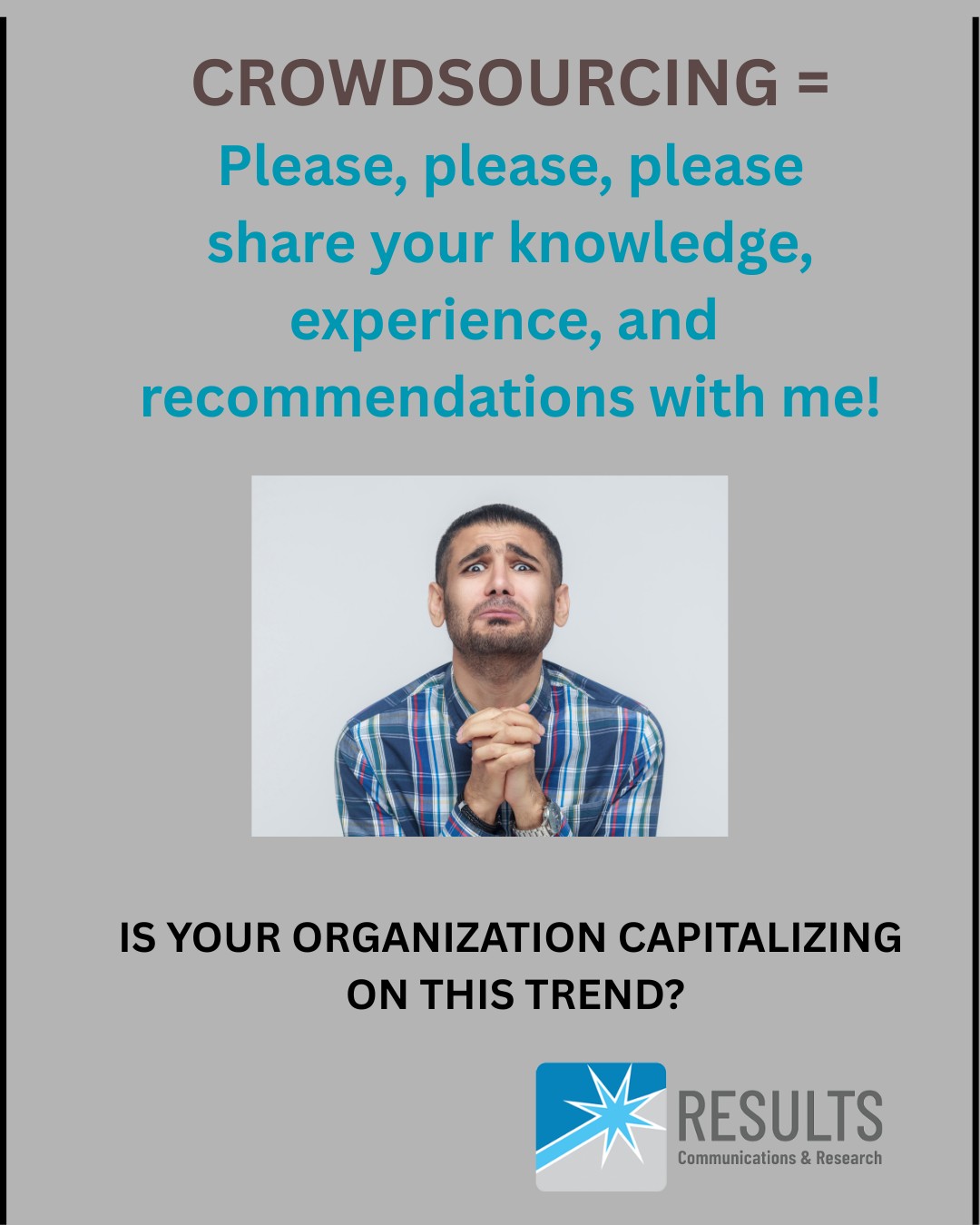
This is a rectangular image that runs vertically that has a gray background and reads in dark turquoise letters "Crowdsourcing = please, please, please share your knowledge, experience, and recommendations with me!" and includes our digital marketing agency's logo, plus the image of a young man wearing a plaid shirt and who has short dark hair and wide eyes and who is holding his hands together with a sad mouth as if he is pleading, plus the image says at the bottom, "is your organization capitalizing on this trend?"

Knowledge Crowdsourcing Platforms and SEO

As SEO experts, we keep hearing and reading over and over again that, when making a decision about which organizations’ online content to serve back in response to a searcher’s query, AI search engines/answer engines/chatbot engines are looking for signals that an organization is creditable and reputable, and where do they get those signals from, in addition to testimonials and other signs of credibility that are on the organizations’ own websites (think badges of associations your organization belongs to, certifications you’ve achieved, and backlinks from other organizations, including press/media/PR backlinks)? From platforms where people post recommendations in areas of the platform specifically designed for sharing recommendations and/or in the comments section in response to other users’ posts requesting recommendations from or posing questions to other users.

You can learn more about what’s been deemed “E-E-A-T” and how AI search engines look for signs of “Experience-Expertise-Authoritativeness-Trustworthiness in this “The Role Of E-E-A-T In AI Narratives: Building Brand Authority For Search Success” blog post from Search Engine Land.

Examples Of Crowdsourcing Platforms

  • Yelp – reviews of restaurant and other local business — such as contractors and personal services (think nail and hair salons)
  • Nextdoor – neighborhood social media platform
  • Reddit – discussion forum
  • Quora – discussion forum
  • Google My Business Profile Of Specific Organization (Google Reviews section)

Implications Of Crowdsourcing For Your Business/Organization

So, what are the implications of crowdsourcing for your business or organization?

  • Since some individuals seeking knowledge to support a decision they want and need to make go directly to a crowdsourcing platform to get information, you’ll want to have a positive presence on as many of the larger crowdsourcing platforms mentioned above as possible, and as appropriate for your particular industry. For example, Yelp might not make sense for your particular type of business.
  • If there are particular platforms that individuals use to recommend/rate businesses in your particular industry, you will want to ensure a favorable presence there, as well.
  • And, implementing what’s outlined in the two bullets above should provide plenty of positive trust and authority signals to search engines to encourage them to share your organization’s online content.

How To Show Up Favorably/Positively On Crowdsourcing Platforms

We mentioned above that your organization should show up favorably/positively on crowdsourcing platforms, but unfortunately what that looks like depends on the nature of the platform itself and the industry within your organization operates, and that’s why we encourage you to set up a complimentary discussion with us about how to use the current crowdsourcing trend to your specific organization’s advantage. But a common, over-arching way that all organizations can show up favorably/positively on crowdsourcing platforms is simply to encourage their customers to share positive information about them in online locations beyond the Google reviews section of their Google My Business Profile, i.e., on Yelp, Reddit, Quora, nextdoor and relevant industry crowdsourcing platforms. And, ultimately, all of this is about reputation management!

AEO, AI Search, Being Found On Bing, Being Found on Google, Search Engine Optimization, SEO, website

With AI Search, There’s Far Less Wading, But You Really Don’t Know If What You Catch Is Going To Be Edible

Last week, I read thru a really great piece by a fellow SEO expert that included a chart comparing AI search to traditional search. You can check out the chart that compares use of AI search engines like ChatGPT to traditional search engines like Google (the version we all used for years that didn’t/doesn’t have an AI component). Of course, Google has rolled out an AI mode, but again, we are talking about the older versions of Google and search engines like Bing and Yahoo that we were all accustomed to using for years and years.

Later that week, I was struck by this metaphor that sums up a key difference between what you can expect from results spit back by an AI search and those spit back by a traditional search engine. And, the metaphor is this. While traditional search engines require/required the searcher to visit and sift thru extensive content on a number of different websites, AI search doesn’t require you do all that wading thru of information/content. AI/answer/chat engines like ChatGPT do the content wading for you — sifting thru content all over the internet (websites, social media platforms, discussion platforms, etc.) and consolidating what they believe is appropriate information to provide you with content that will most effectively and directly answer the question you entered into their engine.

While it’s great you don’t have to do all the sifting and wading, the challenge called out in the Sunday Boston Globe Magazine this past weekend is this: sure, you’re not going to have to visit countless websites and other digital properties to find an answer to your pressing question, but how do you know if you can trust the answer that an AI search engine has spit back, i.e., it’s accurate? You don’t/won’t.

This image shows too men who are fishing while standing about up to their knees in a pond or a lake and both have their lines cast and you can see the lines above their heads.

Need Help Wading Thru All The Truths and Myths Regarding SEO and AI Search (AEO/GEO)?

Reach out today to schedule a complimentary discussion with an SEO expert.