accountability, keeping a balance, Making Connections, unplugging

Why We’re Glad the Latest “Toy Story” Sequel Isn’t All Fun and Games, But Instead Delivers A Much-Needed Message

A couple of weeks ago, just to escape from our home where we were dealing with a broken Central AC system on a very hot and humid day, my husband (Jay) and I went to see the summer 2026 sequel of “Toy Story, ” entitled “Toy Story 5.” The last time we went to see a Toy Story movie, it was when we were in the early stages of dating and it was showing as part of a series of free outdoors movies at the Charles River Hatch Shell in Boston. That was the summer of 2000. How things have changed on the digital and technology fronts since then!

The premise of Toy Story 5 is simple. Kids don’t know how to play any more! Many children don’t know how to use their creative minds and they don’t know how to interact naturally or normally with other children, i.e., without technology and devices being involved. Many are both afraid and/or unable to figure out how to make something fun out of very little — without using a device — and they don’t feel comfortable asking other children to play. They fear they will be viewed as silly if they want to want to host a teddy bear tea party, or simply ask another child to play with yo-yo’s or fly kites. Jessie, a tough-on-the-outside with a heart-of-god-on-the inside main character gathers and rallies other members of the Toy Story cast to change that dynamic for the good related to the current child in her life!

While I’m currently making a living helping clients with both “digital” and “traditional marketing,” it doesn’t mean I think all recent technological and digital advances are good or that they don’t come with pro’s and con’s, or that there aren’t any downsides to them — as evidenced by my past blog post about the benefits of unplugging from devices once in a while. As you’ll see, I’ve encouraged individuals to “de-grid” for a while, and try to do this as much as I can, particularly on the weekends!

I’m particularly not a fan of filter-less Facebook, but I’ll let you read my recent blog post about why I don’t spend a lot of time on Facebook and why I don’t think it’s healthy for children AND adults to do so! And, related to the “creativity” discussion above, I don’t like how AI engines and tools are keeping individuals from using their creative brains to write their own content or create their own images!

Jay and I have had many a nostalgic conversation about how we spent our childhoods outdoors — playing with siblings and neighborhood kids. We weren’t on laptops, computer, i-pads or phones. As Adam Ezra sings in his song, “Sweet Beautiful Thing,” we’d just go outside and “see what trouble we could get in on,” such as an after-dinner game of hide ‘n go seek or “Red Light, Green Light.” We weren’t texting to arrange something fun in advance (although we might have talked with friends or family members in-person earlier in the day about it), and we also weren’t on social media spying on friends to see what they were up to, or being hurt, if we were left out of something like a girls’ pajama/sleepover party. Friends of our same generation echo the same. We are all so grateful we had the opportunity to live an “unplugged” childhood, and wouldn’t trade it for anything. Our lives were and have been so much richer for it!

So, let’s all take Jessie’s from Toy Story’s lead and, not only encourage children to be present and to use their creative and sociability skills, but let’s remember to do the same as adults!


This is the image of the doll, known as Jessie from Toy Story. She is wearing a cowboy hat and you can see the red underneath side of it and she has red long hair fixed into one long braid and is wearing a cowboy shirt and jeans with a big buckle on it.

Acceptance of Circumstances, accountability, AEO, AI Search, Being Found on Google, brand promise, community involvement, competitive advantage, Customer Service, good will creation, keeping up with trends, lead generation, Memorability, Objectives Setting, organic SEO, reputation management, sales, Search Engine Optimization, SEO, staying current, strategic planning, target audiences, Target Marketing, traditional marketing, Understanding Your Environment, User experience

Your Best Chance Of Appearing In AI Overviews? Being The Best

After reading this Linked post by Eli Schwartz, a very well-respected and well-known SEO expert, about how to appear in Google AI Overviews, the above slogan came to me. I wanted to give credit where credit is due and share how I was inspired. It all makes great sense and is in keeping with what we, as a fellow SEO expert, has been sharing in recent months, i.e., if you want a search engine to declare you as the best, or indicate less directly that your organization is the best or one of the best in its field and geography by mentioning your organization’s name or sharing a link back to your site (known as a citation), then your organization has to earn that “best” title.

We’ve already discussed ways your organization can send signals to AI engines that you are trustworthy in a number of recent blog posts, and that includes getting rave reviews from happy customers. But, ultimately, the way to get those reviews is becoming a company whose products, services, and customer service is unmatched by competitors, by demonstrating your commitment to the community/communities you serve, and by making sure you’re an “employer of choice.”

Why I’ve Got The Experience and Knowledge To Speak To What Makes An Organization An Outstanding One

Having worked since I was a teenager and until my mid-50’s for employers (and served in a number of manager and director roles), and now, for the past 12 years run a marketing agency that has successfully served more than 150 clients and received public-facing accolades (reviews), compliments and appreciation from clients, I believe I’ve got the background and experience to speak to what makes an organization stand out from competitors, and therefore, be considered “the best.” You can learn more about my corporate marketing and marketing agency background on my Our Principal and History website page.

As a life-long marketer I feel so strongly about how many of the attributes below influence an organization’s success that I’ve written about many of the below in past blog posts!

What Does It Take For Your Organization To Be The “Best” In Your Industry and Geography?

  • Treat your employees well.
    • Offer them opportunities to learn and take on new and larger roles.
    • Take the time to listen to and consider employee’s ideas to improve work productivity or process, or the products and services you offer.
    • Offer tangible and intangible benefits that they value and/or need.
    • Celebrate personal and organizational milestones and successes.
    • Offer financial incentives where, if the company does well, the employee does well.
  • Deliver exceptional, world-class service each and every day at every point of contact (EPOC) with customers. As a marketing professional with more than 35 years of experience I know first-hand how important good customer service is to success. Not only when it comes to assisting customers/clients of your organizations, but handling inquiries and leads that come into your organization respectfully, effectively, and on a timely basis!
  • Offer solid, reliable products and services that meet client expectations and needs at a reasonable, fair price.
  • Give back to your community/communities.
  • Always keep an eye on business and daily life changes and how they impact your clients — whether they be businesses or consumers — and how you can make their lives easier or respond to a challenge they are facing.
  • Always be evolving and considering what new innovative product or service you can offer.
  • Educate. Educate. Educate — make sure staff and leaders have time to stay in the know on industry changes and national, regional, and local happenings and anything else that could negatively or positively impact how they and your business does their work or the products and services you offer. Ensure they can learn from both internal and external experts. To support all of this, designate times of the week as meeting-free and learning time!
  • Encourage out-of-the box thinking by all staff and leaders!
  • Treat your clients and customers like family.
  • Take the time to walk in your clients’ and customers’ shoes. Check out this blog post about the importance of walking in your customers’ shoes.
  • Show both your clients and customers appreciation regularly. A small “thank you” goes a long way!

I’ll likely add new features and characteristics to the above list as they strike me, but I think any organization that achieves the aforementioned will succeed at being top in their field, in their particular geography!

Acceptance of Circumstances, accountability, brand promise, differentiation, Making Connections, Making Connections and Introductions, marketing best practices, Marketing Planning, Memorability, mission statement, Networking, Passion, push marketing, relationship building, sales, strategic planning, target audiences, Target Marketing, Understanding Your Environment, User experience

How Small Businesses Can Craft Winning Sales Pitches and Marketing That Last

Guest Blog Post by Charlie Michaels, Entrepreneurworld.net

Boston-area small business owners and marketing managers often face the same small business marketing challenges: low search visibility, inconsistent leads, and a nagging sense that efforts aren’t translating into clear ROI. When sales pitch development is driven by what the business wants to say instead of what buyers struggle with, messaging turns scattered and forgettable. The fastest way to tighten everything is target audience analysis that surfaces real customer pain points and connects them to a simple promise. That clarity becomes the foundation for effective brand communication.

Understanding a Credible Brand Narrative

At the center of a winning pitch is a brand narrative that starts with the buyer, not your business. You map the problem they are trying to solve, then choose storytelling techniques that make them feel understood. Strong research and clear strategy skills help you prove you can deliver, not just promise.

This matters because optimizing for search and ads only work when the message is consistent and believable. If your story is vague, prospects bounce and your marketing feels like a cost. When the story is grounded, it becomes easier to rank, convert, and measure what is working.

Picture a service company pitching “fast, reliable.” A better story names the stressful moment, offers relief, and shows evidence, since tapping into emotion helps people understand and care. Add your ‘why’ by defining the reason your business exists beyond profit..

This is the image of pitcher holding a ball in one hand and wearing a glove on the other and standing on the pitchers mound at a large ballpark and wearing a gray uniform with a long-sleeved navy blue top and the number 20 on it, plus a blue baseball cap

Turn One Core Offer Into 5 Assets and a Repeatable Pitch

If your brand narrative is clear, your customer’s problem, your promise, and the proof, your marketing gets a lot easier. Use the steps below to turn one core offer into a set of usable assets you can ship this week, then improve based on real engagement.

  1. Write a 30-second pitch template (and don’t improvise it): Draft one short script you can reuse across networking, sales calls, and your website hero section. Keep it to: Who you help ? the problem you solve ? your approach ? a believable outcome ? one proof point ? a simple CTA (call-to-action). Example: “We help busy local service businesses get found on Google by fixing on-page SEO and running targeted ads, so you generate consistent leads without guessing, here’s a recent result, and the next step is a 15-minute audit.”
  2. Translate your pitch into customer-centric messaging (“You” > “We”): Take each line of your pitch and rewrite it from the buyer’s perspective using the language they already use in emails and reviews. Aim for one sentence per stage of awareness: pain (“I’m spending on ads but leads are inconsistent”), desired outcome (“I need calls every week”), barrier (“I don’t have time to learn SEO”), confidence (“I want to know what I’m paying for”). This is how you keep the narrative credible without overpromising.
  3. Create 5 core assets from the same message spine: Build a mini “asset stack” so your offer shows up consistently in search, ads, and sales conversations. A simple set is: one landing page, one one-page PDF, a 6–8 slide deck, a short email sequence (3 emails), and 3 social posts that reuse the same hook and proof. Because collateral exists in physical or digital form, you can use the PDF both as a download for leads and as a leave-behind after meetings.
  4. Standardize your visuals with a print-ready template system: Pick two fonts, 2–3 brand colors, and one photo style, then lock them into a reusable layout for your one-pager and slides. A clean template reduces “design thrash” and makes your message easier to scan in a hurry; a great template can make a big difference in clarity, especially for pitch decks. If you also create quick printables for events, like a simple workshop sign, lobby flyer, or QR-code poster, using the same fonts and colors keeps everything consistent, and a printable free poster maker can help you produce those pieces without reinventing your layout.
  5. Add one proof element to every asset (and make it specific): Proof can be a short testimonial, a mini case study (“from X to Y in 60 days”), a screenshot of a metric, or a “what’s included” checklist. Tie the proof back to the customer’s problem from your brand narrative, avoid generic claims like “best in class.” If you’re new and lack results, use process proof: your audit checklist, reporting cadence, and what a client can expect in week 1.
  6. Track 3 engagement metrics and run a monthly “message tune-up”: Keep it simple: landing page conversion rate, email click rate, and deck/one-pager follow-up rate (how many people reply or book after receiving it). Once a month, update one thing based on the data: change the headline, swap the proof point, or tighten the CTA. When objections come up repeatedly, price, timelines, “we tried this before”, add a single slide, FAQ block, or one paragraph to address it with clear ROI logic and evidence.

Prospect Pitch and Marketing Questions Small Teams Ask

Q: What do I say when a prospect pushes back on price?
A: Reframe price as risk reduction and outcomes: what problem is costing them time, leads, or margin right now. Offer a smaller first step like a paid audit or a 30-day pilot with one measurable target. Then anchor with proof, even if it is process proof like reporting cadence and deliverables.

Q: How do I pick lead generation tactics without wasting money?
A: Match the channel to intent: search and local SEO for “ready to buy,” and email or retargeting for “not yet.” Start with one primary channel and one support channel, run it for 2 to 4 weeks, and keep the offer consistent so results are comparable.

Q: How should I measure marketing ROI if I do not have perfect tracking?
A: Use a simple baseline: leads, booked calls, close rate, and average deal value. Marketing leaders feeling that pressure from the board rose 21% is a reminder to report what you can, consistently, rather than waiting for perfect attribution.

Q: Can testimonials really improve conversions, or is that just nice-to-have?
A: They help because customer trust in SMB (small- and medium-sized business) sales is built on confidence, reliability, and credibility. Use specific testimonials tied to one objection, like timelines or results, and place them near your CTA.

Q: When should I change my pitch versus keep iterating on the same message?
A: Change it when qualified prospects repeatedly misunderstand what you do, who it is for, or what success looks like. Otherwise, keep the core claim stable and test one variable at a time like headline, offer, or proof.

Launch-Ready Pitch and Marketing Checklist

This checklist turns your pitch and campaign into a repeatable weekly system. It helps you stay focused on what moves revenue, especially when 60% fail to meet objectives and the difference is usually clarity and follow-through.

? Confirm a single goal and one primary success metric

? Define the buyer segment, problem, and decision trigger

? Draft a compelling elevator pitch that grabs attention fast

? Map three proof points to your top objections

? Choose one primary channel and one support channel

? Build one landing page with one CTA and one offer

? Track leads, booked calls, close rate, and deal value weekly

Ship the next iteration today, then let results steer your edits.

Turn Your Pitch Into a Long-Term Marketing Rhythm

Most small businesses don’t struggle with effort, they struggle with keeping the story consistent while results come in unevenly. The way through is a simple loop: treat your pitch and marketing as a living message, anchored by continuous marketing improvement through customer feedback utilization, sales performance analysis, and steady brand message refinement. When that becomes the norm, campaigns get clearer, conversations get easier, and your best customers start recognizing you faster. A strong pitch isn’t one perfect script; it’s a story you keep sharpening based on real results. Set a 30-minute weekly review to check what sold, what got ignored, and what customers repeated back. That rhythm turns day-to-day outreach into a long-term marketing strategy you can sustain through busy seasons and uncertainty.

About Our Guest Blogger, Charlie Michaels

Charlie Michaels created EntrepreneurWorld.net to connect and guide entrepreneurs all over the world! He came up with the idea in the midst of the pandemic. Feeling isolated and anxious, he thought other entrepreneurs, near and far, might be feeling the same way. He wanted to create a central digital gathering space where entrepreneurs could come to get support and learn from one another. Entrepreneur World is in its early stages, but Michaels is working hard to grow it to meet his big vision.

Acceptance of Circumstances, accountability, AI Productivity Tools, Importance of taking break, keeping a balance, keeping up with trends, making time for things you value, Objectives Setting, staying current, strategic planning, walking, warriors, fighters, doing good, giving back, paying it forward

Taking A Step Backward To Move Forward

So many fellow marketing professionals are talking about the value of storytelling these days, and that got me thinking about what story of my own vs. my clients’ that I could tell that might help or inspire others.

In recent months, I’ve taken a step backward on both the professional and personal fronts with the ultimate goal of improving my work-related productivity and my health.

What Tool Can Help Improve A Marketing Professional’s Productivity?

Over the last two or so months, I’ve spent a very large number of hours creating monthly marketing dashboards/reports for each of my ongoing/monthly clients in a new tool. Well, new to me, not new to marketing agencies and consultants. It was a huge investment of time, and there was a big learning curve — and I used ChatGPT along the way when I needed help with challenges I ran into along the way. But, I’m pleased and proud to share that I successfully migrated the aforementioned clients away from manually populated KPI Google sheets and Word docs to monthly reports on Google Looker Studio.

Accomplishing the above meant I had to allow myself to live with the discomfort that other client and administrative work was piling up. But, I was eventually able to catch back up on the piled-up work and sacrificing the short-term for the long-term has already allowed me and my clients to reap the following benefits of my taking time to learn and implement reports on Google Looker Studio:

  • I can focus less on manually entering data in KPI sheets and Word documents and focus more on the data itself and what the auto-populated reports are showing/indicating
  • I have more free work/personal time and work/life balance, which means I’m less stressed and my brain is fresher and has more energy for being creative and strategic
  • I can present results visually vs. just in table or paragraph format, so that clients can easily understand their monthly results and metrics
this image shows the legs of woman below the knees who is walking on wooden pier and who is wearing jeans and who is bare-footed.

Hitting The Health Bad Guys Head-On

I won’t go into detail about my health history, but for the last 20 years, I’ve dealt with difficult health challenges. You can read my health story at Our Heart Speaks, an organization who provides a voice to individuals who are dealing with chronic illness and/or disability and in this past blog post about why I’ll always feel like a cancer patient.

The sum of all of it is this. I have struggled with severe digestive issues for 12 years now, and there have been days and times — a number of them — where I literally cried about my situation and felt I just couldn’t handle/deal with it anymore. But I am a fighter, and I’ve always picked myself back up somehow, while trying to lift up others too.

I have seen a large number of functional/natural nutritionists and consultants, and gastroenterologists over the years, and tried countless recommendations to try to improve or eliminate my severe digestive symptoms.

For the second time over the last 12 years, I recently underwent a SIBO breath test, which required a limited diet leading up to, and 12 hours of fasting before, the test. The last time I had one, nothing helpful/conclusive came out of it, but this time my results indicated I have both what’s known as SIBO (small intestinal bacterial overgrowth) and IMO (intestinal methanogen overgrowth).

The above can be treated, and possibly cured, by one or several courses of one or two antibiotics or thru many-months-long herbal supplement treatment. Because I believe the straw that broke the camel’s back related to my digestive issues was being put on a very powerful antibiotic after a surgical wound got infected in 2014 — killing off good bacteria in the gut and allowing bad bacteria to multiply — I decided to go the natural route in treating my SIBO and IMO. I’ve read that, often, the antibiotic approach is not effective and the bad bacteria and archaea return. But, the natural route has it’s challenges too, as I’m discovering already, including:

  • the supplements are expensive, only certain ones really work, and many, if not all, need to be taken in high dosages to be effective
  • you need 3 types of supplements or supplement groups: 1) one(s) that reduce inflammation, 2) one(s) that kill off the “bad guys” causing “die-off,” and 3) one(s) that improve motility and gut transit time
  • side effects of some of these supplements include nausea, burning, stomach pain/cramps, dizziness, and other unpleasant symptoms (including some of the symptoms I already had from having SIBO/IMO)

It’s the last bullet item directly above that really hammers home why I included the work I’m doing to address my health challenge in this blog post about “taking a step backward, to take a step forward.” Because, ultimately, I may need to feel worse on the digestive front for a few weeks (I just started my supplements on 3/27/26) in order to ultimately feel better!

We hope that whether it pertains to your professional life or your personal life, you’ll be both willing and able to take some steps back that will ultimately move you forward! And, we’d love to hear all about the steps back and the steps forward!

Speaking Of Steps, Be Sure To Check Out Our Blog Posts About Walking!

Check out our large collection of walking-related blogs, including ones about Boston, RI, and New England here: https://allintheresults.com/category/walking/

Acceptance of Circumstances, accountability, AEO, AI Search, Being Found On Bing, Being Found on Google, blog, Blog, Blogging, content marketing, GEO, keeping up with trends, marketing best practices, organic SEO, pull marketing, Search Engine Optimization, search terms, SEO, staying current, strategic planning, target audiences, Target Marketing, website

Do I Need To Keep Adding New Content To My Website To Continue To Be Found Online?

The answer to the above question is pretty straightforward, and in most cases, “yes.” Given that we are in the day and age where individuals are using what’s known as answer engines — think ChatGPT, Perplexity, and Claude — more and more for both business and personal purposes, if an organization wants to continue to be found online, it DOES need to regularly produce and publish new content. Unless your site is one that is only meant to provide very static information and credibility to people who already know or have found your organization, your organization will need to do the following to support your organization’s name being mentioned or a link to your organization being served up by answer engines in response to relevant prompts.

This image is a print screen of what it looks like when you go into a WordPress website to add a new post and says "Add new Post" at the top and "enter title here."

What Types Of Content Do I Need To Create If I Want To Be Found In Answer Engine Results?

  • Blog posts or questions that reside within a website FAQ (frequently asked questions) page that answer questions that your organization regularly gets asked by prospective clients and existing clients
  • Blog posts or questions that reside within a website FAQ page that answer questions that keyword research and answer research indicates your target audiences are asking answer engines/searching on
  • Blog posts that speak to topics that are “tangential” to the particular products and services you offer, but that are important ones for your target audiences. For example, you might offer seniors in-home care, but write and publish some blog posts about senior fraud, aging in place/aging at home, and exercises for seniors. You get the picture!

Even if you’ve already published such content, target audiences’ questions and needs change/evolve, and both from a marketing standpoint and a search-engine standpoint, you need to demonstrate that you are staying current/relevant/up-to-date. It’s not good to have clients or prospective clients visit your site and see that you haven’t put up any new content in many months and/or content is outdated — it looks like you’re not minding your shop, and if you aren’t, what else might you neglect? And, search engines are more likely to serve up new, fresh content than content that is old and dated.

In sum, a static site will NOT help your organization be found online by target audiences, given how individuals gather information these days. Sure, it’s time-consuming, but regularly producing and posting new content answering questions and providing information that benefit your target audiences needs to be an ongoing marketing activity. As we’ve always said, “SEO (search engine optimization) is NOT a one-and-done exercise.

Need Help Figuring Out What To Blog About And How Frequently?

Reach out today to schedule a complimentary discussion with our digital marketing agency about your blog strategy!

Acceptance of Circumstances, accountability, collaboration, partnerships, relationship building

Partnerships That Work: How Small Businesses Can Build Together Without Breaking Apart

Guest Blog Post by Charlie Michaels, Entrepreneurworld.net

Call it a partnership. Call it a handshake deal with paperwork behind it. Either way, most small business collaborations fail not from bad intent, but from slow, quiet unraveling. Communication thins. Assumptions spread. Someone thought they’d be handling inventory. Someone else thought they were only handling design. Then it turns out nobody handled billing. And it’s not just about misfires—sometimes, the core agreement was never clear to begin with. That’s what this is about. Not how to partner, but how to avoid having to un-partner later.

Most people think collaboration means “work together.” It doesn’t.

In decision-making research, there’s this concept called the prisoner’s dilemma. Two people, same goal, no trust. If both stay silent, both walk free. If one talks, the other suffers. If both talk, both get burned. What usually happens? They both talk. Not because they want to lose—because they don’t trust the other to stay quiet. That’s how most small business collaborations look when they’re rushed. Everyone’s hedging. No one’s quite sure what the other will do when things get hard. Partnerships only work when people are willing to lose a little power upfront, in service of something bigger.

This image shows three individuals, two young white men and one black woman dressed professionally, who are sitting around a conference room or office table discussing something.

Systems beat chemistry. Every time.

If a collaboration can’t survive a bad week, it wasn’t a collaboration. It was a fantasy. You need structure—deadlines, scopes, fallback plans. And not just in writing. Partners need to know how the whole thing fits together, especially when they’re not the one driving. The mental models that make collaboration effective aren’t about being nice. They’re about being predictable in the right ways, and adaptable in the right moments. Without that, people guess. And people are bad guessers under pressure.

If your foundation is wobbly, the partnership won’t fix it.

Before any deal, ask: is the business itself ready to collaborate? Or are you just looking for a lifeline? When ownership is unclear and obligations are fuzzy, partnerships just add complexity. Sometimes the best first move is to formalize your structure. When you start an LLC with ZenBusiness, you’re giving the collaboration something to stand on. Not just for liability. But for clarity. It’s a way of saying, “we’re taking this seriously,” and giving your future partners a reason to take you seriously too.

Good collaborations don’t look like press releases. They look like check-ins.

Most successful partnerships feel low-drama from the outside. But inside? They’re messy, iterative, a little chaotic. That’s a good sign. Case in point: one community-academic partnership engagement insight showed that regular recalibration—not perfect planning—is what kept them moving. In small business terms, that’s your weekly sync. That’s “what’s not working, and how are we going to deal with it?” done 50 times a year. If you’re waiting until something breaks to talk about process, you’re already behind.

Most local collaborations die in the weeds.

It’s easy to say “let’s partner locally.” It’s harder to map who else needs to be looped in. Permit offices, shared suppliers, unspoken community hierarchies. This isn’t corporate. Local partnerships operate more like ecosystems. And when people forget that, their projects stall. One systems science framework for collaboration mapped this exact thing. The collaborations that worked didn’t just share values—they understood their own position inside something bigger. Small business owners who think in systems—not just projects—tend to last longer in the room.

You can’t fix chaos with software.

No tool will rescue you from misalignment. Not Slack. Not Notion. Not that overpriced CRM everyone’s been talking about. Tools work when the team behind them is already synced. Otherwise, they’re just louder ways to be confused. The psychological foundations of effective teamwork have almost nothing to do with tech. It’s about who notices what. Who speaks up when something’s off. Who repairs, even if they weren’t the one who broke it. You want your collaboration to work? Build rhythm. Then pick your tools.

Don’t talk about goals. Show each other what you’ll give.

Want to know what really holds a partnership together after the shine wears off? Reciprocity. Not just “you do X, I do Y.” Deeper than that. “I’ll do this now, even if it’s invisible, because I know you’re doing something I can’t see yet too.” That’s what small business owners need to build into the DNA of their partnerships. Otherwise? You’re tracking favors. You’re building resentment spreadsheets. Keep the exchange visible. That’s how you keep the trust renewable.

Innovation doesn’t happen in brainstorms. It happens in maps.

Here’s the mistake: people think creativity means coming up with ideas together in real time. It doesn’t. It means knowing who to go to for what—and not wasting time reinventing what already works. That’s what shared memory systems are. That’s how effective teams scale: not by sharing everything, but by remembering who holds what. When that’s in place, you get real velocity. Not alignment theater. Not “we’re on the same page” speeches. Just movement.

Remember, don’t overcomplicate it. Good partnerships are built, not found. And most of what they need—clarity, rhythm, reciprocity—is fixable if someone’s paying attention. So pay attention. That’s the work.

Unlock the full potential of your business with Results Communications and Research, your go-to partner for strategic SEO and digital marketing solutions that drive visibility and growth.

About Our Guest Blogger, Charlie Michaels

Charlie Michaels created EntrepreneurWorld.net to connect and guide entrepreneurs all over the world! He came up with the idea in the midst of the pandemic. Feeling isolated and anxious, he thought other entrepreneurs, near and far, might be feeling the same way. He wanted to create a central digital gathering space where entrepreneurs could come to get support and learn from one another. Entrepreneur World is in its early stages, but Michaels is working hard to grow it to meet his big vision.

Acceptance of Circumstances, accountability, brand promise, community involvement, Facebook, fundraising/development, good will creation, Marketing Planning, online presence, relationship building, reputation management, social media, social media strategy, social media voice, Understanding Your Environment, warriors, fighters, doing good, giving back, paying it forward

Filter-less Facebook

Over the last five years, I’ve spent less and less personal vs. business time on Facebook — whether it be posting my own updates, or reading friends’ and family members’ posts. I still use Facebook to promote my digital-marketing-agency clients and to promote my own business, Results Communications and Research.

And, I’m going to continue to use Facebook to promote my various fundraising walks and community causes I’m involved with. Why? Because that was the original intent of “social” media – to share beneficial/helpful information that would make the world a better place.

What I Don’t Like About Using Facebook From A Personal Vs. Business Standpoint

What bugs me most about Facebook is this: there’s no way for personal vs. business posters to apply a filter. Let’s face it, you wouldn’t do any of the following related to a text or e-mail you send a friend or family member, or when talking with them via Facetime, Zoom, or in-person:

  • Mention you just had lunch with your mom or played golf with your dad if they recently lost their mother or father
  • Talk about an extravagant vacation to someone who either can’t afford one or whose circumstances don’t allow them to travel, such as someone who is a caregiver to an ill spouse, child, or other family member and has no flexibility to travel; they could also be unable to travel because of illness or disability
  • Share photos of a new baby or grandbaby with someone who is struggling to conceive or adopt, or who just had a miscarriage, or maybe even with a childless friend who always wanted to be a parent
  • Share photos of a romantic date with or a gift from a significant other with a friend you know is lonely on the day in-question or on holidays like Valentine’s Day or New Year’s Eve, e.g., someone who doesn’t enjoy being single or who just lost a spouse or a significant other
This is a gray rectangular image that runs horizontally and has a gray background and says in bold turquoise or black letters "always stay humble & kind" - Lori McKenna and contains the logo of our digital marketing agency, Results Communications & Research.

You get the picture!

So, if we’re connected on Facebook personally vs. following each other’s businesses, expect to see me on Facebook even less than you have in past years, except for the fundraising and community-cause promotion reasons above. And, of yeah, I’ll probably be celebrating Celtics victories or ranting about losses, and promoting my favorite local musical artists.

Given the inability to “filter” who sees your various personal posts — as well as to know what is going on in each and every Facebook connection’s life at any point in time, I encourage those who continue to post regularly on Facebook to ask themselves if they’d be better supporting their friends and family if they held off on posting about certain topics that might cause a sub-set of their friends and family discomfort, sadness, anxiety or envy on any given day vs. posting about things that might lift them up!

Using Facebook For Business Purposes

Of course, the above need to be careful and kind when posting on Facebook applies to businesses and organizations too. Need help developing a Facebook organic posting or paid advertising strategy that won’t offend your customers or prospective customers? Reach out today!

Acceptance of Circumstances, accountability, AEO, AI Search, Being Found on Google, competitive advantage, Discussion Forums, Google Analytics, Google My Business Profile, Importance of taking break, keeping a balance, keeping up with trends, making time for things you value, Marketing Planning, Objectives Setting, online presence, organic SEO, Quora, Reddit, Results Analysis, Search Engine Optimization, SEO, staying current, strategic planning, walking, website

September Strong: A Second Chance To Set & Achieve Goals For The Year

If my memory serves me correctly, I’ve written about the second “new beginning” that September offers each of us each year on my own blog or that of a client. I love the fact that September provides a second start to any year and a chance to begin any kind of project you’d been hoping to get to earlier in the year, and to revisit goals — whether they be personal- or work-related ones. There’s still four full months to accomplish something you’ve always wanted to, or at least make a lot of headway toward achieving that accomplishment, so let’s agree to not start thinking another year is already behind us!

Since I own and run a digital marketing agency, the fall and early winter work goals I’m going to discuss below are marketing-related, but obviously, your work goals could pertain to any area of your organization, such as employee satisfaction and retention, new technology implementation, or expense reduction.

Marketing Goals For Q3 & Q4

Here’s some marketing goals you might want to complete in September, October, November, or December:

Personal (Health) Goals For Q3 & Q4

Since everything one does in life ends up positively or negatively impacting their mental and/or physical health, every personal goal ultimately is a wellbeing/wellness/health goal. For example, if you enroll in a class this fall or winter, it may cause you to gain knowledge to support a professional goal, but it also will likely make you feel more optimistic and improve your emotional wellbeing.

As I shared in this blog post about why I’ll always feel like a cancer (sarcoma) patient, I deal with chronic digestive issues on a daily basis because of past cancer treatment. I also have had chronic neck muscle mobility and pain issues since my late 20’s. Unfortunately, the neck trouble all started when I was working as a research associate at Fidelity Investments and going to graduate school at Boston University at night. I used to regularly carry a heavy bookbag of notebooks and books on the T (subway) to and from the University for many years. Post graduation, and ever since then, I’ve suffered from neck troubles.

I’ve already taken steps this summer, and plan to continue them thru the rest of Q3 & Q4, to improve the above two situations by:

This is the image of a small bronze colored Degas ballerina statue who has her shoulders back and arms behind her and who is wearing a ballet tutu and ballet slippers.
Degas Ballerina Statue That Provides Reminder About The Need to Maintain Good Posture While On Computer!

In addition to the above, I’m using the hashtag #SeptemberStrong with friends and family to encourage them to stay well and for us to cheer each other on, and I’m identifying situations and people that are unnecessarily and excessively anxiety-producing (in some cases, toxic) and steering clear of them!

Reach Out For Help On Your Q2 & Q3 Goals!

Whether you want or need a free wellness cheerleader, or you need help with business/work goal setting and achievement — particularly marketing goals — I’m here to support you, so reach out today! I love being an accountability partner on both the work and wellness fronts! And, be sure to check out our Keep Up The Fight page to encourage you to keep on plugging related to your goals! We totally got this, right?

Acceptance of Circumstances, accountability, community involvement, good will creation, keeping up with trends, making time for things you value, Understanding Your Environment, warriors, fighters, doing good, giving back, paying it forward

Redirecting Anger To Action-Taking

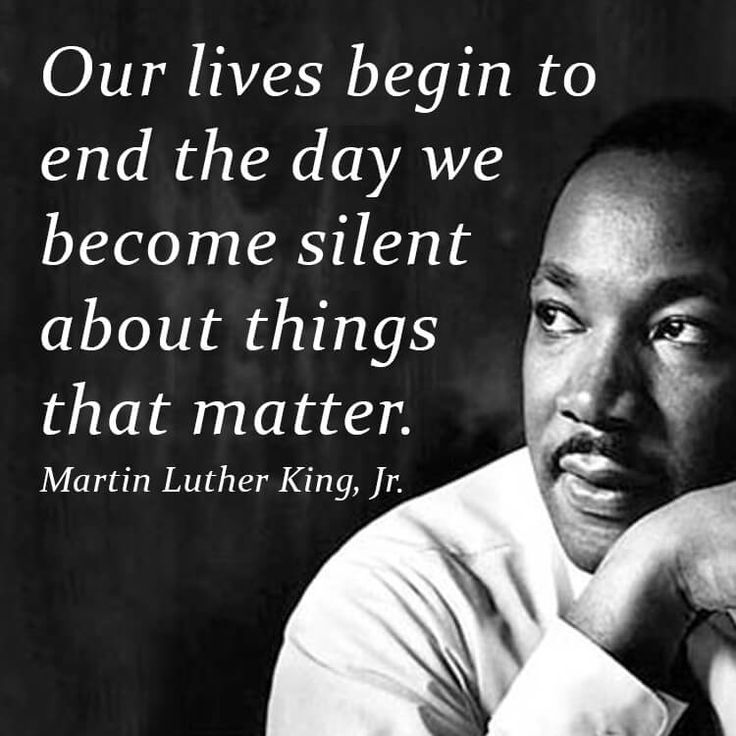
As the owner of a digital marketing agency and SEO consulting firm, I have to be very careful about taking a public stance on political issues. After all, it’s highly likely that not all of my prospective clients and existing clients are on the same political page as me. That’s why I don’t tend to post on social media about my political leanings and/or share political opinions, but perhaps, when I retire I will. I’ve always liked this quote attributed to Martin Luther King, Jr. related to the importance of speaking out about what matters.

This is a black and white square image that shows a picture of Marti Luther King Jr. on the right and says "Our lives begin to end the day we become silent about things that matter."

Actions You Can Take Now To Make A Difference For The United States Of America

The exception I’m making this year (it’s February 2025 as I post this and our country and world feel particularly out-of-control and crazy) is to publicly remind and encourage people to speak out if they are unhappy about the state of the United States and actions that POTUS and his administration are taking or plan to take related to how our country operates and serves U.S. citizens and/or world relations/affairs. That’s what I’ve been doing and that’s what I plan to continue to do. E-mail or call my two state senators and the Congressman for my Massachusetts district. Attend any town halls where senators and congressmen and congresswomen want to hear how the constituency they serve is doing and feeling and where’s there’s an opportunity to submit questions, voice concerns, and to hear answers to other MA citizens’ questions and concerns.

Holding In Or Onto Anger Is Not Healthy

I find holding a lot of anger inside is not healthy and makes things worse, and it’s far better to redirect that anger into action-taking, such as the actions I outlined above. And, it’s important to not just take the actions once, but rather, to keep taking them, unless you see the change you want to see in our country and world.

So, when you’re feeling crazy angry about the state of our country and world, why not make or take the time to let your senators and congressman or congresswoman know? This gives them information they can take back to the House or the Senate and can share about how their constituency is feeling. And, ultimately the Senate and Congress are supposed to be representing the people they serve and taking the right actions related to their wishes, so they need to keep hearing over and over again from their constituents what those wishes are.

Need Some Inspiration To Speak Out Or Speak Up?

Check out the Keep Up The Fight Page of our website and get inspired by the song shared below from the musical, “Ragtime.”

History shows that not speaking up or taking action, or turning a blind eye, has lead to horrific events like the Holocaust. Learn why and how the Holocaust happened. Be part of the solution and be part of the movement to not let something thought to be impossible like the Holocaust ever happen again!

Make Them Hear You!!!

Every voice matters. When 1,000,000 small voices join forces, change happens!!!

Acceptance of Circumstances, accountability, Being Found On Bing, Being Found on Google, competitive advantage, Google My Business Profile, online presence, organic SEO, pull marketing, Search Engine Optimization, SEO, SEO tags, strategic planning, website

A Body In Motion Stays In Motion

My blog title is a quote I plan to use this year to inspire myself as well as others — on both the work and personal fronts. You can see I’m already adhering to it on the personal front related to keeping a daily exercise routine going. But, what does it mean related to the SEO work I do for clients and for the SEO clients themselves?

Like Many Other Marketing Activities, SEO Should Be An Ongoing One

I’ve said countless times in meetings with clients and prospective clients that SEO is not a “one and done activity.” Slow, but steady progress is made on the “being found on Google” (and other search engines, of course) front if one keeps at it, as we reinforce in our blog post about why SEO needs to be a constant marketing activity vs. a one-off.

Many organizations get the ball rolling on their SEO — often in conjunction with launching a brand new website or in conjunction with revamping an existing one — but then, don’t keep the momentum going. I refer to the SEO work that gets done at the time of a new or revised website launch as “initial SEO” work. But, for-profit and non-profit organizations often lose site of the fact that they are going to need to continue to implement the following SEO tactics, on an ongoing basis, in order to ensure they make steady, positive progress as far as how their website ranks in search engines for relevant terms used by desired target audiences:

This is a powder blue square image that reads "A Body In Motion Stays In Motion" and lists Issac Newton and the source of the quote and also includes an image of a number of brightly colored marbles with the one in the front that is featured/stands out more and the image also contains the logo of our SEO consulting firm, Results Communications & Research.

Non-Website SEO Tactics

In addition to the above ongoing website-related tactics, as part of an ongoing SEO strategy, organizations should execute the following:

Get Customized/Personalized Help From An SEO Consultant

The above list of ongoing SEO tactics to implement is not inclusive and all of the tactics cited may not be appropriate for each & every organization. Schedule a complimentary discussion of your organization’s specific SEO needs today!